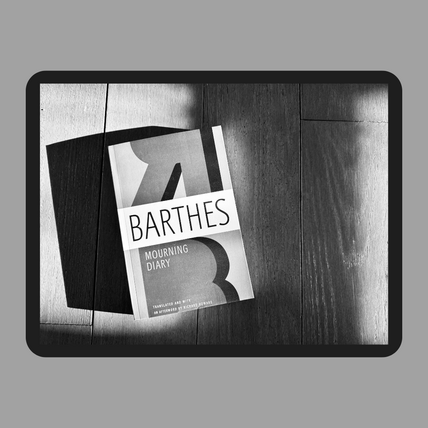
Can a novel with a singular voice also be a chorus? Can it reject the conventions of the novel and still be a novel? Poet, essayist, and novelist Billy-Ray Belcourt tells critic Matt Hooley how his desire to write a novel that “would sound like something else,” led him to produce A Minor Chorus, hisContinue reading “10.2 Beautiful Sentences Matter: Billy-Ray Belcourt and Matt Hooley (SW)”
Tag Archives: noveldialogue
10.1 Extreme Circumstances, Extreme Reactions: Aaron Gwyn and Sean McCann (JP)
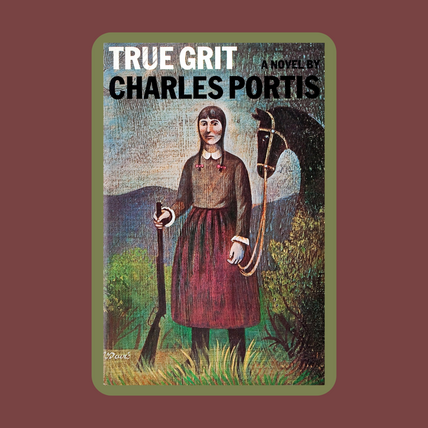
Aaron Gwyn is the author of four novels: The World Beneath, Wynne’s War, and, most recently, two wonderfully linked historical novels, All God’s Children, which won the Oklahoma Book award, and The Cannibal Owl. In his conversation with Sean McCann of Wesleyan (A Pinnacle of Feeling: American Literature and Presidential Government and Gumshoe America: Hard-BoiledContinue reading “10.1 Extreme Circumstances, Extreme Reactions: Aaron Gwyn and Sean McCann (JP)”
9.6 We Better Laugh About It: Álvaro Enrigue and Maia Gil’Adí
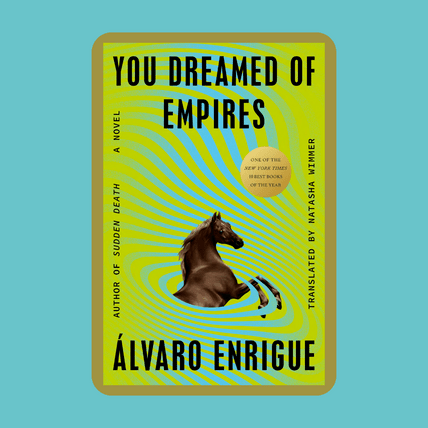
Álvaro Enrigue and critic Maia Gil’Adí begin their conversation considering translation as a living process, one that is internal to the novel form. Álvaro, author of the trippy You Dreamed of Empires, explains how the opening letter to his translator Natasha mirrors the letter to his editor, Teresa, in Spanish, and how both letters become partContinue reading “9.6 We Better Laugh About It: Álvaro Enrigue and Maia Gil’Adí”
9.5 Who Owns These Tools?: Vauhini Vara and Aarthi Vadde (SW)

In an essay about her recent book Searches, a genre-bending chronicle of the deeply personal ways we use the internet and the uncanny ways it uses us, Vauhini Vara admits that several reviewers seemed to mistake her engagement with ChatGPT as an uncritical embrace of large language models. Enter Aarthi Vadde to talk with VauhiniContinue reading “9.5 Who Owns These Tools?: Vauhini Vara and Aarthi Vadde (SW)”
9.4 “That In Between Time:” Fernanda Trías and Heather Cleary (MAT)
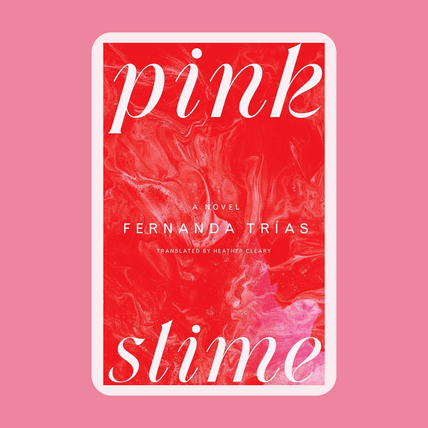
Fernanda Trías’s Pink Slime (Mugre rosa) was first published in Spanish in October 2020, several months into a global pandemic that had bent our world into something uncannily similar to the one imagined in the Uruguayan writer’s fourth novel. Here, an environmental disaster that begins as red algae bloom in the oceans has produced aContinue reading “9.4 “That In Between Time:” Fernanda Trías and Heather Cleary (MAT)”
9.3 Planetary Boundaries are Non-Negotiable: Kim Stanley Robinson and Elizabeth Carolyn Miller (JP)

In Season 9, Novel Dialogue set out to find the Venn diagram intersection of tech and fiction—only to realize that Kim Stanley Robinson had staked his claim on the territory decades ago. With influential series on California, on the terraforming of Mars, and on human civilization as reshaped by rising tides, KSR has established aContinue reading “9.3 Planetary Boundaries are Non-Negotiable: Kim Stanley Robinson and Elizabeth Carolyn Miller (JP)”
9.2 Monstrous Dreaming: Lauren Beukes and Andrew Pepper (RB)
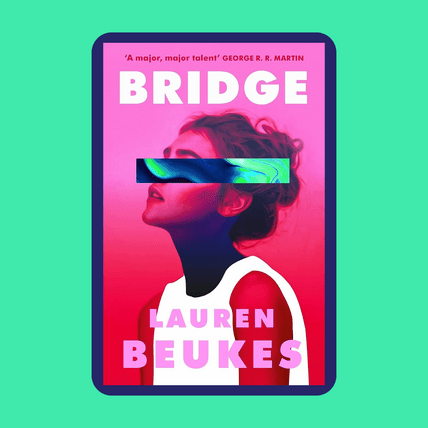
What work can genre do today? And can the genre system become more than a method of reductive containment and market segmentation—can it be a generative source of imaginative chaos? Few are as qualified to address these questions as Lauren Beukes, whose simultaneous embrace of genres from science fiction to crime to horror and refusalContinue reading “9.2 Monstrous Dreaming: Lauren Beukes and Andrew Pepper (RB)”
9.1 Novels are Like Elephants: Ken Liu and Rose Casey (SW)
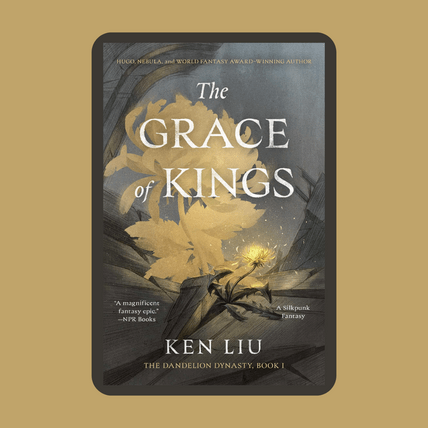
It’s a bit surprising to hear a writer known for building worlds that incorporate deep historical research and elaborate technological details extol the virtues of play, but Ken Liu tells critic Rose Casey and host Sarah Wasserman that if “your idea of heaven doesn’t include play, then I’m not sure it’s a heaven people wantContinue reading “9.1 Novels are Like Elephants: Ken Liu and Rose Casey (SW)”
9.0 Writing Against the System (EH, CH)

We kick off Season 9: TECH by talking with our very own Aarthi Vadde, the E. Blake Byrne Associate Professor of English at Duke University. Hosts and co-producers Chris Holmes and Emily Hyde ask Aarthi about the role of the novel in relation to the mass writing platforms that dominate our digital lives. Aarthi isContinue reading “9.0 Writing Against the System (EH, CH)”
8.6 “I love a dialectical reader, and best is a dialectical reader who cries”: Jordy Rosenberg and Annie McClanahan (RB)

Eighteenth century prison break artist and folk hero Jack Sheppard is among history’s most frequently adapted rogues: his exploits have inspired Daniel Defoe, John Gay, Bertolt Brecht, and most recently, Jordy Rosenberg, whose first novel, Confessions of the Fox (2018), rewrites Sheppard as a trans man and Sheppard’s partner Bess as a South Asian lascarContinue reading “8.6 “I love a dialectical reader, and best is a dialectical reader who cries”: Jordy Rosenberg and Annie McClanahan (RB)”
8.5 And Soon: Lydia Millet and Emily Hyde (JP)

During a desert thunderstorm outside Tucson, Lydia Millet joined the Novel Dialogue conversation with hosts John Plotz and Emily Hyde, with Emily playing the role of critic. Lydia—author of more than a dozen novels and story collections and recently the nonfictional We Loved it All—also works at the Center for Biological Diversity. Wild creatures gambol, flap, swim, andContinue reading “8.5 And Soon: Lydia Millet and Emily Hyde (JP)”
8.4 All of Our Stories Were War Stories: Jamil Jan Kochai and Kalyan Nadiminti (AV)

Imagine growing up between Sacramento, California and Logar, Afghanistan; you hear stories about war, watch coverage of the United States’ War on Terror on television, and then visit your family in the very places that the U.S. army invaded and occupied. These experiences shape the work of novelist Jamil Jan Kochai, author of 99 Nights in Logar and TheContinue reading “8.4 All of Our Stories Were War Stories: Jamil Jan Kochai and Kalyan Nadiminti (AV)”
8.3 Aspire to Magic but End Up With Madness: Adam Ehrlich Sachs speaks with Sunny Yudkoff (JP)
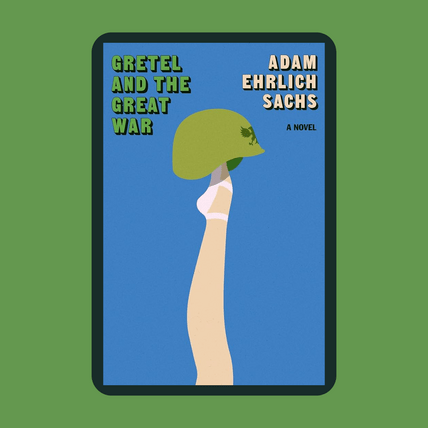
What happens when a novelist wants “nonsense and joy” but his characters are destined for a Central European sanatorium? How does the abecedarian form (i.e. organized not chronologically or sequentially but alphabetically) insist on order, yet also embrace absurdity? Here to ponder such questions with host John Plotz are University of Wisconsin–Madison’s Sunny Yudkoff (last heardContinue reading “8.3 Aspire to Magic but End Up With Madness: Adam Ehrlich Sachs speaks with Sunny Yudkoff (JP)”
8.2 To gallop again and again into failure: Kaveh Akbar and Pardis Dabashi (SW)
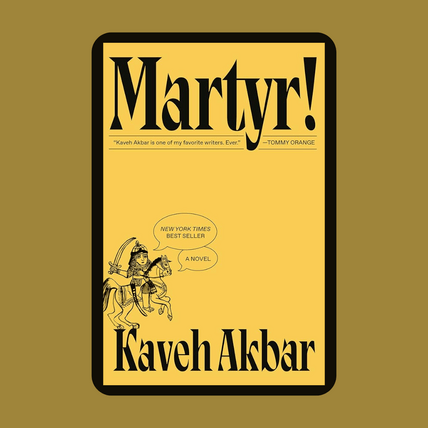
An unforgettable horse gallops through the pages of Kaveh Akbar’s best-selling novel Martyr! (2024), but it is a figurative hastening toward failure and the limitations of language that Akbar discusses with critic Pardis Dabashi. In their conversation, Kaveh considers writing both as an escape from the confines of the self and as a vehicle forContinue reading “8.2 To gallop again and again into failure: Kaveh Akbar and Pardis Dabashi (SW)”
8.1 Dirt Bag Novels: Lydia Kiesling in Conversation with Megan Ward (CH)
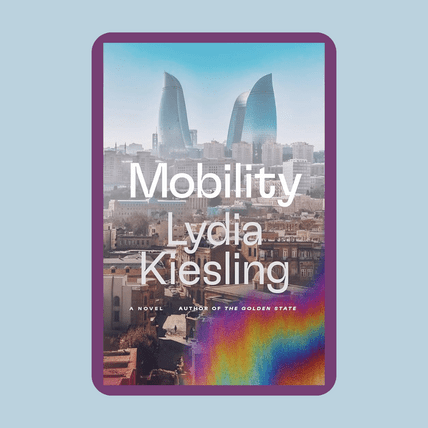
What does it mean for a novel to think globally? And can a global novel concerned with the macro movements of capital and labor still exist in the form of a bildungsroman? This conversation between Lydia Kiesling and Megan Ward takes up questions of form and political consciousness in the novel, globality and rootedness, capitalismContinue reading “8.1 Dirt Bag Novels: Lydia Kiesling in Conversation with Megan Ward (CH)”
2. Jennifer Egan, Reverberator

“The novel wraps itself around you like a cocoon.”
1.3 Oh, The Places You’ll Go: Madhuri Vijay talks to Ulka Anjaria (AV)

Ulka Anjaria and Madhuri Vijay sit down to talk about Madhuri’s prize-winning first novel The Far Field. They discuss what it’s like to write intimately about a place – Kashmir – that many people even within India know only through headlines and news stories. Getting intimate with a place moves us into talking about the IndianContinue reading “1.3 Oh, The Places You’ll Go: Madhuri Vijay talks to Ulka Anjaria (AV)”
 Novel Dialogue