Aaron Gwyn is the author of four novels: The World Beneath, Wynne’s War, and, most recently, two wonderfully linked historical novels, All God’s Children, which won the Oklahoma Book award, and The Cannibal Owl. In his conversation with Sean McCann of Wesleyan (A Pinnacle of Feeling: American Literature and Presidential Government and Gumshoe America: Hard-Boiled Crime Fiction and the Rise and Fall of New Deal Liberalism) and Novel Dialogue’s own John Plotz, we learn that Robert Lemmons is a real historical figure and so is Levi English.
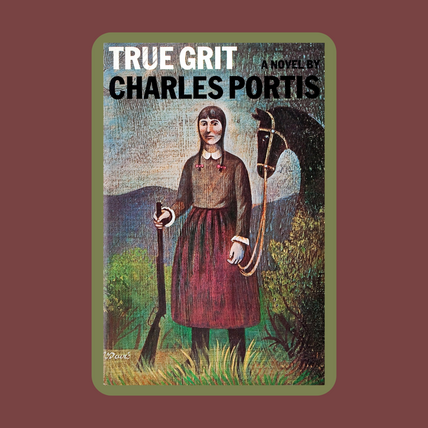
One way to grasp Gwyn’s achievement is to consider the contrast between his durably realist work and Cormac McCarthy’s 1985 Blood Meridian. Much as Aaron and Sean admire that novel, McCarthy’s characters strike them as monstrous and incredible. How about Charles Portis’s True Grit, asks John? Aaron loves it for its ventriloquizing power, and its truth-loving willingness to weave in unsettling back stories like Rooster Cogburn’s ties to Quantrill’s Rangers, an eerily modern pro-Confederate terrorist paramilitary. In our signature question, we learn why Aaron’s favorite teacher was Robert Hill, Pink-Floyd-loving drummer and perennial inspiration (audio here).
Mentioned in this episode:
Richard Slotkin’s notion of “the man who knows Indians” comes from Gunfighter Nation
Mark Twain, A Connecticut Yankee in King Arthur’s Court (1889)
Herman Melville, Moby Dick
William Faulkner, Absalom, Absalom!
Toni Morrison, Beloved
Thomas Pynchon, Gravity’s Rainbow
John Williams, Stoner (but also Butcher’s Crossing –-which John loves— and Augustus, which did indeed split the National Book Award (not the Pulitzer) in 1973 with John Barth’s Chimera.
Larry McMurtry’s hard-to-get-into Lonesome Dove
Listen and Read:
Audio: Extreme Circumstances, Extreme Reactions: Aaron Gwyn and Sean McCann (JP)
Transcript: 10.1 Extreme Circumstances, Extreme Reactions: Aaron Gwyn and Sean McCann (JP)
11.2 Taking Apart a Metaphor: Dan Sinykin and Sarah Brouillette on the Literary Ecosystem – Novel Dialogue
- 11.2 Taking Apart a Metaphor: Dan Sinykin and Sarah Brouillette on the Literary Ecosystem
- 11.1 Indie Presses and the Literary Ecosystem: Meg Reid and Will Evans
- 10.5 The Novel as Instrument: Sinan Antoon and Michael Allan (MAT)
- 10.4 Place Presents Itself To You in Fragments: Ivan Vladislavić and Jeanne-Marie Jackson (MAT)
- 10.3 Just Slightly Outside the Circle: Peter Orner and Sarah Wasserman (EH)
Cover design. True Grit, Charles Portis, Simon & Schuster, Inc., 1968. Front cover.

