
Season 5 of Novel Dialogue opens with an impassioned refresher course in literary theory brought to you by Ocean Vuong, poet and author of the bestselling novel On Earth We’re Briefly Gorgeous (2019). Ocean talks with critic Amy E. Elkins and host Emily Hyde about browsing bookstore shelves and building his personal reading list of “life-giving weirdos.” They discuss genre and gender, antiquing and thrifting, fish sauce and photography, all the while integrating the insights of queer theory and the full range of literary history. What does looking at the world as a junkyard have to do with making art? What does it feel like to run smack dab into a memory? How can we be mindful of the fact that words (like “this”) are tiny objects with infinite possibilities? If autofiction annoys you, listen for how the form reinvents the self against dominant class and gender structures. And if your boots have ever touched down in Hot Springs, Arkansas, stay tuned for our signature question and don’t miss this episode!
Image credit: Amy E. Elkins, “Ocean’s Boots” (2023)
Mentioned in this episode:
Judith Butler
Anne Carson Autobiography of Red
Bhanu Kapil
Theresa Hak Kyung Cha
Djuna Barnes Nightwood
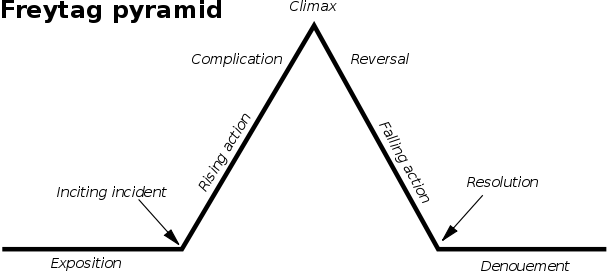
Freytag’s triangle
Flaubert’s flâneur
Tim Ingold, Making: Anthropology, Archaeology, Art and Architecture
Walter Benjamin, “The Storyteller: Reflections on the Works of Nikolai Leskov”
Murasaki Shikibu, The Tale of Genji
Amy E. Elkins, “The Weaver’s Handshake”
William Carlos Williams
Eve Kosofsky Sedgwick
Susan Sontag
Walt Whitman
Langston Hughes
Lucille Clifton
Hot Springs High School
The Sugarhill Gang, “Rappers Delight”
Duchamp’s ready-mades
Listen and Read:
Audio: We Have This-ness, Y’all
Transcript: 5.1 We Have This-ness, Y’all
11.1 Indie Presses and the Literary Ecosystem: Meg Reid and Will Evans – Novel Dialogue
- 11.1 Indie Presses and the Literary Ecosystem: Meg Reid and Will Evans
- 10.5 The Novel as Instrument: Sinan Antoon and Michael Allan (MAT)
- 10.4 Place Presents Itself To You in Fragments: Ivan Vladislavić and Jeanne-Marie Jackson (MAT)
- 10.3 Just Slightly Outside the Circle: Peter Orner and Sarah Wasserman (EH)
- 10.2 Beautiful Sentences Matter. Billy-Ray Belcourt and Matt Hooley (SW)