Chicago is the main character, the setting, the obsession, and the historical grist for the mill of Peter Orner’s most recent novel, The Gossip Columnist’s Daughter. In conversation about his hometown with Novel Dialogue host Sarah Wasserman, Peter brings us into a lost pocket of time. It is the early 1960s, when Chicagoans partied in a kind of “Midwestern Weimar” and the gossip columnist Irv Kupcinet, holding forth as many as six times a week for 60 years, wrote a garrulous, glamorous story of the city. While the increasingly unhinged narrator of his novel investigates the mysterious death of Kupcinet’s daughter in 1963, Peter delves into his own family’s history, anxiously asking “we can’t hurt our dead, can we?” The novel swerves between fact and fiction, including photographs that are both real artifacts from the historical record and staged photos that participate in the fictional world of the novel. Peter laughs off this contradiction, remarking “the closer I get to real things, the more fictional it becomes.” How to describe such a complicated novel? Sarah offers this gem: “It’s as if Philip Roth were less cancellable and wrote a murder mystery,” a line that results in a poignant conversation about what it means to be Jewish and socially striving in Chicago in middle of the 20th century and what it means to be a cultural outsider, “just slightly outside of the circle.” Peter brings the conversation to a close with a memory of going to the University of Tish.
Mentioned in this episode:
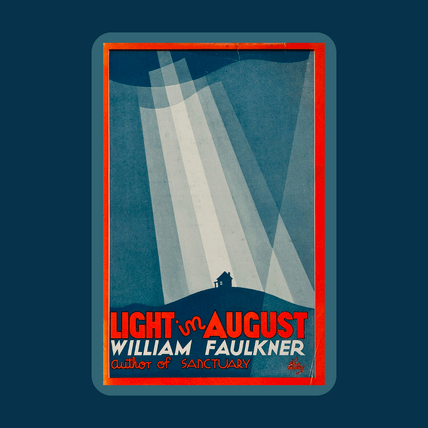
Reverend Hightower appears in William Faulkner’s Light in August
Irv “Kup” and Essee Kupcinet were Karyn “Cookie” Kupcinet’s parents
An Edna O’Brien story appears in Andre Dubus’s Dancing After Hours
Malcolm Lowry’s Under the Volcano
Phyllis Diller at the Palmer House
Bette Howland’s line about Chicago being “the raw materials for a city” appears in Blue in Chicago
Alberto Paniagua
Philip Roth
Tish O’Dowd Ezekiel’s Floaters
Listen and Read:
Audio: Just Slightly Outside the Circle: Peter Orner and Sarah Wasserman (EH)
Transcript: 10.3 Just Slightly Outside the Circle: Peter Orner and Sarah Wasserman (EH)
11.1 Indie Presses and the Literary Ecosystem: Meg Reid and Will Evans – Novel Dialogue
- 11.1 Indie Presses and the Literary Ecosystem: Meg Reid and Will Evans
- 10.5 The Novel as Instrument: Sinan Antoon and Michael Allan (MAT)
- 10.4 Place Presents Itself To You in Fragments: Ivan Vladislavić and Jeanne-Marie Jackson (MAT)
- 10.3 Just Slightly Outside the Circle: Peter Orner and Sarah Wasserman (EH)
- 10.2 Beautiful Sentences Matter. Billy-Ray Belcourt and Matt Hooley (SW)
Cover design. Light in August, William Faulkner, Smith and Haas, 1932. Front cover.

