What’s the truth and what’s a lie? What’s a memoir, what’s a novel, and what if both are just a series of “prose blocks”? This conversation between Sarah Manguso and Tess McNulty takes up questions of writing and veracity, trauma and memory. Sarah Manguso is the author of nine books, including three memoirs. Her first novel, Very Cold People, was named a finalist for the PEN/Jean Stein Book Award, and her second novel, Liars, is forthcoming. Tess and Sarah discuss how the threshold between truth and fiction is often used to minimize writing by women and how characters can achieve escape velocity against the pull of violence and abuse. We learn that Sarah doesn’t imagine an audience when she writes—instead, writing articulates something felt in the body, something that remains “uncomfortable until it is so articulated.” From the Yankee thrift of book design and the writing of front matter, acknowledgements, and Sarah’s brilliant titles, we move to 70s-era typography and wordplay with the answer to Season 7’s signature question.
Mentioned in this episode:
By Sarah Manguso: Very Cold People, 300 Arguments, Ongoingness: The End of a Diary, The Two Kinds of Decay and Hard to Admit and Harder to Escape in One Hundred and Forty Five Stories in A Small Box by Deb Olin Unferth, Sarah Manguso, and Dave Eggers
Hilary Mantel
Lord Byron, “If I don’t write to empty my mind, I go mad,” from an 1821 letter published in Volume 8 of Byron’s Letters and Journals, edited by Leslie A. Marchand.
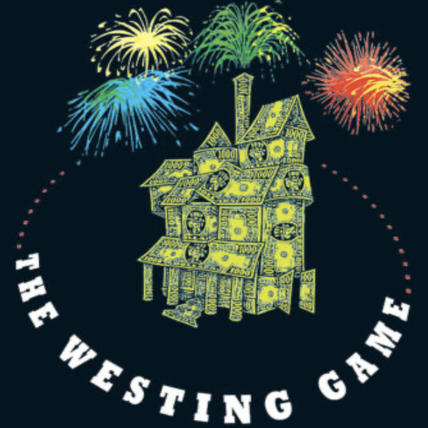
Ellen Raskin, The Westing Game
Listen and Read:
Audio: Escape Velocity: Sarah Manguso in Conversation with Tess McNulty (EH)
Transcript: 7.6 Escape Velocity: Sarah Manguso in Conversation with Tess McNulty (EH)
10.2 Beautiful Sentences Matter. Billy-Ray Belcourt and Matt Hooley (SW) – Novel Dialogue
- 10.2 Beautiful Sentences Matter. Billy-Ray Belcourt and Matt Hooley (SW)
- 10.1 "Extreme Circumstances, Extreme Reactions:” Aaron Gwyn and Sean McCann (JP)
- We Better Laugh About It: A Discussion with Álvaro Enrigue and Maia Gil’Adí
- 9.5 Who Owns These Tools? Vauhini Vara and Aarthi Vadde (SW)
- 9.4 “That In Between Time,” Fernanda Trías and Heather Cleary (MAT)
 Novel Dialogue