10.5 The Novel as Instrument: Sinan Antoon and Michael Allan (MAT)

“I am haunted by history: the history of dictatorship, the history of empire, history as a whole,” declares the Iraqi novelist, poet, scholar, and literary translator Sinan Antoon near the start of this conversation about his most recent novel, Of Loss and Lavender. Sinan, speaking with Magalí and critic Michael Allan, goes on to say that “the novel allows for a more wholesome, in-depth confrontation with history.” That confrontation, in turn, requires narrative forms that are complex, sometimes fractured, and often non-linear in order to braid together a range of different perspectives on a particular moment or event.

As Sinan observes in a discussion of the Arabic term nisyān—“forgetting” or “forgetfulness,” although its nuances in Arabic are not easily rendered in English—even memory itself is not static. And yet, shared histories of empire and imperialism make it possible to draw connections between far-flung locations, as Sinan does in Of Loss and Lavender by drawing together Iraq and Puerto Rico. From here, the conversation turns to the pleasures and challenges of translation, including some of Sinan’s choices when translating his own work into English. This includes the effort to make legible the nuances of race, class, and other forms of difference across contexts; although, as Sinan notes, much of his younger readership in the Arab world today is often well-versed in US culture. The conversation concludes with a discussion of Sinan’s frequent use of poems and songs in the novel, a device that points back to the multi-genre experiments of the premodern Arabic tradition, and a moving portrait of a teacher who transmitted to his students ideas about justice and equality despite the dictatorship under which he worked.

About Baghdad
The Baghdad Eucharist
Mahmoud Darwish, In the Presence of Absence
Darwish’s “Memory for Forgetfulness” (on nisyān)
The Book of Collateral Damage
Elias Khoury and the use of dialect in contemporary Arabic fiction
Quebecois literature
Breaking Bad
Um Kulthoum

Audio: The Novel as Instrument: Sinan Antoon and Michael Allan (MAT)

Transcript: 10.5 The Novel as Instrument: Sinan Antoon and Michael Allan (MAT)
11.1 Indie Presses and the Literary Ecosystem: Meg Reid and Will Evans – Novel Dialogue

Meg Reid and Will Evans join Mesha Maren to consider what makes up a literary ecosystem. As leaders of two nonprofit independent presses,Hub City Writers Project and Deep Vellum Press, Meg and Will describe their roles as publishers, booksellers, community builders, and advocates working with the many interconnected players in publishing: writers, readers, translators, critics, librarians, distributors, and funders. They discuss how independent presses create literary infrastructure by staying rooted in their communities, building relationships with readers, and making space for voices and stories that might otherwise be overlooked.The conversation turns to the impact of consolidation across the publishing industry and the effects of a marketplace increasingly shaped by scale. Will explains how Deep Vellum’s origins were tied to a concern that conglomeration was narrowing access to translated literature—and how that same narrowing affects writers and readers in local communities. Meg reflects on Hub City’s intentionally small publishing model and the ways independent presses can offer an alternative built around people rather than volume. Together, they explore the possibilities of a more diverse literary landscape, one where readers are invited to discover books beyond the dominant channels.From bookstores to distribution networks, Meg and Will unpack the systems that determine how books reach readers. They discuss why independent presses have increasingly opened their own bookstores, how distribution consolidation affects which books appear on shelves, and why availability in a warehouse does not necessarily mean availability in a bookstore. They also examine the difficult economics behind publishing: inventory costs, shipping, print runs, pricing, and the challenge of keeping books accessible while sustaining small presses.Closing with the announcement of the Literary Arts Fund’s first round of grants, Meg and Will reflect on what sustained philanthropic investment could mean for literary nonprofits. They describe the importance of long-term support that allows presses to take risks, deepen community work, and collaborate across the literary field. For both publishers, the future of books depends on strengthening the connections among all parts of the ecosystem—and finding ways to invite more people into it.Mentioned in this episode:Meg Reid, Hub City Writers ProjectWill Evans, Deep Vellum PressDan Sinykin, scholar and author of Big Fiction: How Conglomeration Changed the Publishing Industry and American Literature and American Literature & the Long DownturnIngramConsortium Book Sales & DistributionTwo Dollar RadioMilkweed EditionsCenter for the Art of TranslationTwo Lines PressThe Literary Arts FundMellon FoundationNational Endowment for the Arts (NEA) Hosted by Simplecast, an AdsWizz company. See pcm.adswizz.com for information about our collection and use of personal data for advertising.
  1. 11.1 Indie Presses and the Literary Ecosystem: Meg Reid and Will Evans
  2. 10.5 The Novel as Instrument: Sinan Antoon and Michael Allan (MAT)
  3. 10.4 Place Presents Itself To You in Fragments: Ivan Vladislavić and Jeanne-Marie Jackson (MAT)
  4. 10.3 Just Slightly Outside the Circle: Peter Orner and Sarah Wasserman (EH)
  5. 10.2 Beautiful Sentences Matter. Billy-Ray Belcourt and Matt Hooley (SW)

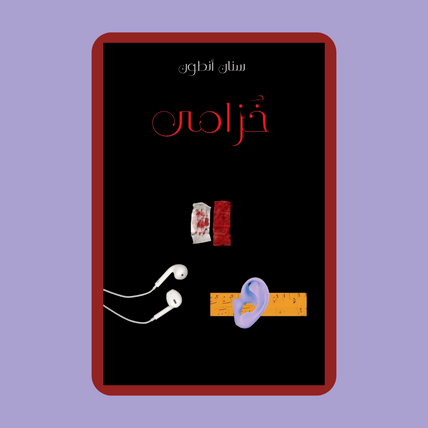
Cover design. Of Loss and Lavender, Sinan Antoon, Manshourat al jamal, 2023. Front cover.