Becca Rothfeld and Joanna Biggs join Mesha Maren to consider the role of literary criticism in a changing literary ecosystem. As critics and editors working at publications including The New Yorker, The Point, and The Yale Review, Becca and Joanna reflect on how they found their way into public-facing intellectual work. Becca describes discovering the tradition of long-form literary criticism while working at The New Republic after having studied philosophy at Harvard, while Joanna recalls truly learning to write and edit at the London Review of Books after graduating from Oxford University. Both speak to literary criticism as a distinctive space for intellectual inquiry, one that combines rigor, wit, and experimentation in ways that can be difficult to accommodate elsewhere.
The conversation turns to the responsibilities of critics toward their readers. Should criticism meet people where they are, or challenge them to read beyond their existing interests? Becca argues that treating readers as intellectual equals means asking them to grapple with difficult books rather than reassuring them that great literature is easy or entertaining in the same way as television. Together, they consider how critics can help readers cross the threshold into challenging texts without diminishing the difficulty—and the rewards—of the encounter.
Maren then asks how artificial intelligence might alter the practice of literary criticism. Drawing on Immanuel Kant, Becca argues that aesthetic judgment arises from the interaction of human faculties. She questions whether AI can participate in that process. She distinguishes between evaluating a work’s artistic success and interpreting cultural artifacts as evidence of the society that produced them. Joanna, meanwhile, wonders what would be lost if an AI could write a beautiful novel, emphasizing the human thinking and creative processes that make literature meaningful. Both express concern that a flood of automatically generated language could smooth away the very struggles, decisions, and sensibilities that give writing its cultural significance.
In their closing reflections, Becca describes criticism as a way of taking the measure of a culture, uncovering its unspoken assumptions, anxieties, and desires through the artifacts it produces and Joanna points to the challenge of assessing popular culture with both honesty and humility, while acknowledging that a critic cannot always know which works will endure. They also reflect on how criticism can preserve the significance of people and ideas that might otherwise be forgotten, as literary criticism itself becomes a lasting record of intellectual life.
Mentioned in this episode:
Becca Rothfeld, All Things Are Too Small
Joanna Biggs, A Life of One’s Own: Nine Women Writers Begin Again
Immanuel Kant
Lionel Trilling
Susan Sontag
Cynthia Ozick
Irving Howe
Stanley Cavell
Leslie Fiedler
Elizabeth Hardwick, “The Decline of Book Reviewing”
Laurent Dubreuil, “Metal Machine Music”
Sheila Heti
Must We Mean What We Say? by Stanley Cavell
Pride and Prejudice by Jane Austen
Surfing with Sartre
The Bachelor
Listen and Read:
Audio: 11.4 Criticism and the Literary Ecosystem: Becca Rothfeld and Joanna Biggs (MM)
Transcript: 11.4 Criticism and the Literary Ecosystem: Becca Rothfeld and Joanna Biggs (MM)
11.4 Criticism and the Literary Ecosystem: Becca Rothfeld and Joanna Biggs – Novel Dialogue
- 11.4 Criticism and the Literary Ecosystem: Becca Rothfeld and Joanna Biggs
- 11.3 “Thank god for editors”: Imbolo Mbue and Sarah Dimick (RB)
- 11.2 Taking Apart a Metaphor: Dan Sinykin and Sarah Brouillette on the Literary Ecosystem
- 11.1 Indie Presses and the Literary Ecosystem: Meg Reid and Will Evans
- 10.5 The Novel as Instrument: Sinan Antoon and Michael Allan (MAT)
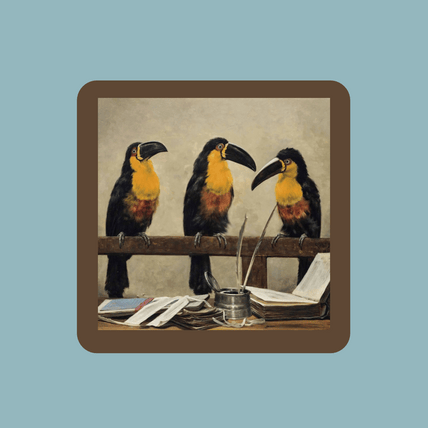
Image: Robert Morley, “The literary critics” (1888) https://commons.wikimedia.org/wiki/File:Robert_Morley_The_literary_critics_1888.jpg


