Shola von Reinhold is the author of LOTE, a novel about getting lost in the archives and finding what the archives have lost. LOTE won the 2021 James Tait Black prize so who better to join Shola on Novel Dialogue than Ben Bateman of Edinburgh University, lead judge of the prize committee? This conversation takes listeners back to all yesterday’s parties as Shola, Ben, and Aarthi time travel to the Harlem Renaissance and the interwar modernist era. Shola offers up Richard Bruce Nugent as their current figure of fascination (or “transfixion” to use a key image from LOTE), and wonders what it would have been like to move through Harlem and London by Nugent’s side.
Recovering the stories of black writers and artists is essential to Shola’s literary project. It is also inseparable from restoring queerness to the once hyper-masculine and “muscular” paradigm of modernism. In a stirring discussion of the aesthetic forms and moods of historical recovery, Ben and Shola sink into the “purpleness” of the fin-de-siècle and explore the critical power of black sensuousness. Talk of decadence, ornamentality, and frivolity shapes the latter half of this episode, and Doris Payne, the West Virginian jewel thief, emerges as an exquisitely improbable modernist heroine!
Mentioned in this episode:
Richard Bruce Nugent
Dorothy Heyward and DuBose Heyward, Porgy
E.M. Forster
David Levering Lewis, When Harlem was in Vogue
Saidiya Hartman
Benjamin Kahan, The Book of Minor Perverts
James Joyce, Ulysses
Willa Cather, “Paul’s Case”
Ornamentality via Kant, Hegel, and Adolf Loos
Susan Sontag
Doris Payne – a.k.a “Diamond Doris”
Édouard Glissant
Listen and Read:
Audio: The Romance of Recovery
Transcript: 3.5 The Romance of Recovery
11.2 Taking Apart a Metaphor: Dan Sinykin and Sarah Brouillette on the Literary Ecosystem – Novel Dialogue
- 11.2 Taking Apart a Metaphor: Dan Sinykin and Sarah Brouillette on the Literary Ecosystem
- 11.1 Indie Presses and the Literary Ecosystem: Meg Reid and Will Evans
- 10.5 The Novel as Instrument: Sinan Antoon and Michael Allan (MAT)
- 10.4 Place Presents Itself To You in Fragments: Ivan Vladislavić and Jeanne-Marie Jackson (MAT)
- 10.3 Just Slightly Outside the Circle: Peter Orner and Sarah Wasserman (EH)
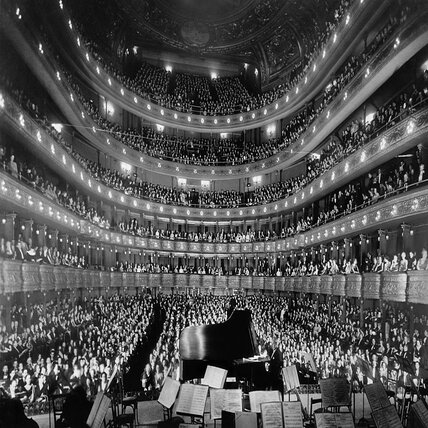
Photo credit: Retouched by Mmxx, Public domain, via Wikimedia Commons

